


Aug - Sep 2022

Contextual Complaints Journey

Complaints are often treated as isolated incidents—but in reality, they unfold as multi-stage journeys shaped by interactions, systems, and emotions. This project reframed complaints as a service journey, uncovering systemic breakdowns and transforming a fragmented, ticket-based model into a contextual, SLA-driven system—reducing resolution time and improving efficiency, clarity, and overall experience.

UX Design
Journey Mapping
Customer Experience (CX)

Project Overview

⚔️ The Challenge

The existing complaints system was built on vague structures, making it difficult for users to find relevant support options and causing inefficiencies in agent workflows. This led to delays in resolution and lower satisfaction for both customers and couriers. These issues are emerging due to:

  • Fragmented complaint handling across channels
  • Lack of visibility across the full journey
  • Emotional escalation due to inconsistent interactions
  • No clear feedback loop into service improvement

👥 Target Users

MRSOOL Customers and Couriers using the mobile app during their order journey.

📌 Scope

  • Led the exploration and design of a contextual complaints framework, including journey mapping, insight synthesis, and service-level implications.
  • Redesign the Complaint Tree to reflect updated support policies and ensure that complaint reasons appear in-context throughout the order experience — improving clarity, usability, and resolution speed.

🌟 The Opportunity

How might we surface the right complaint reasons at the right moment in the user’s journey, making support easier to access and more effective — while aligning with the new support structure and policies?

🏆 Accomplishments and Impact

Transformed complaints from a fragmented, ticket-based model into a contextual, SLA-driven system, reducing resolution time to minutes and improving efficiency, clarity, and user experience.

  • Transformed Complaint Handling into a Contextual System
    Redesigned complaints from a static, ticket-based model into a context-aware service journey, enabling faster, more accurate resolution and uncovering systemic gaps across support flows.
  • Simplified Complaint Structure
    Reduced overall complaint reasons by ~81%, improving clarity and usability:
    • 🛍️ Buyer complaints ↓ ~80%
    • 🚗 Courier complaints ↓ ~84%
    Also consolidated complaint types by ~44%, creating a more intuitive system:
    • 🛍️ Buyer types ↓ ~44%
    • 🚗 Courier types ↓ ~43%
  • Introduced Contextual Logic
    Established 9 contextual conditions based on order status, user type, and service context—ensuring users see only relevant complaint options at the right time.
  • Enabled Priority-Driven Support
    Implemented a 5-level priority matrix aligned with SLAs, enabling more consistent, timely, and impact-driven responses.
  • Eliminated Redundancy & Improved Accuracy
    Removed duplicate and outdated complaint reasons, aligning the system with real user behavior and operational needs.
  • Strengthened Operational Efficiency
    Reduced ambiguity across support flows, improved routing accuracy, and created a scalable foundation for future support enhancements.

🧪 Research

1. User Research Insights

User research revealed that complaint reasons were fragmented, duplicated, and difficult to navigate, leading to confusion and inefficient complaint submission. These issues were further amplified by evolving support policies and SLAs, highlighting the need for a more structured, context-aware complaint system.
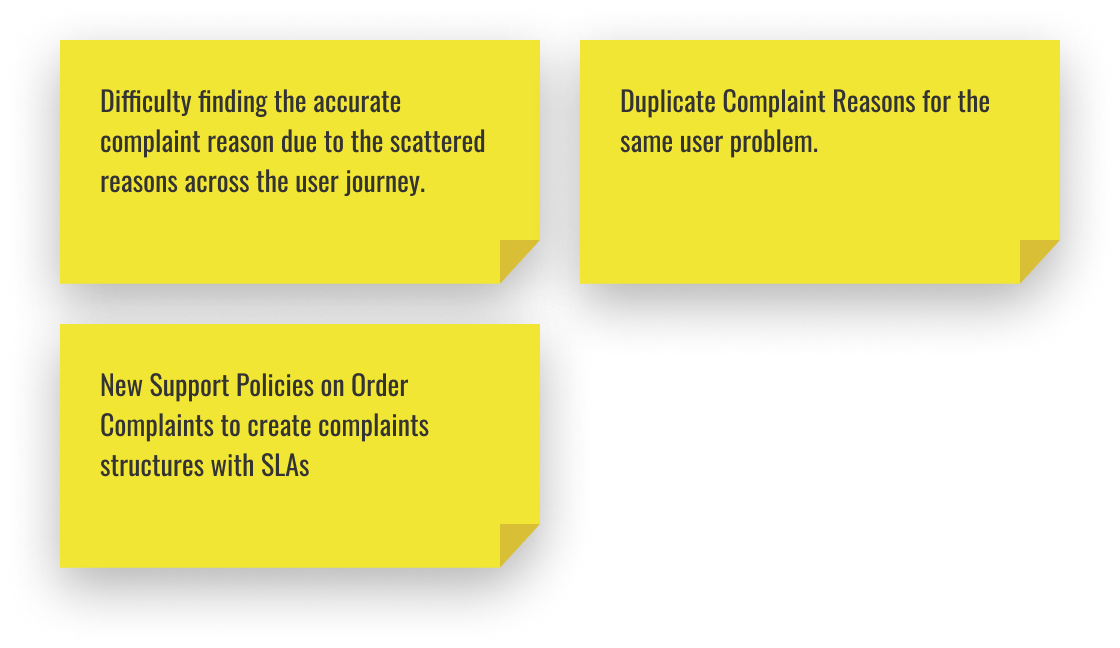
Research Insights
Research Insights
2. Zendesk Analytics

Analyzed historical support data to understand how users interacted with complaint reasons in the app support. By clustering and filtering data based on frequency and usage patterns, key issues were identified:

  • High duplication across complaint categories
  • Overloaded and unclear reason lists
  • Misalignment between complaint reasons and actual user context

These insights informed the restructuring of the Complaint Tree.
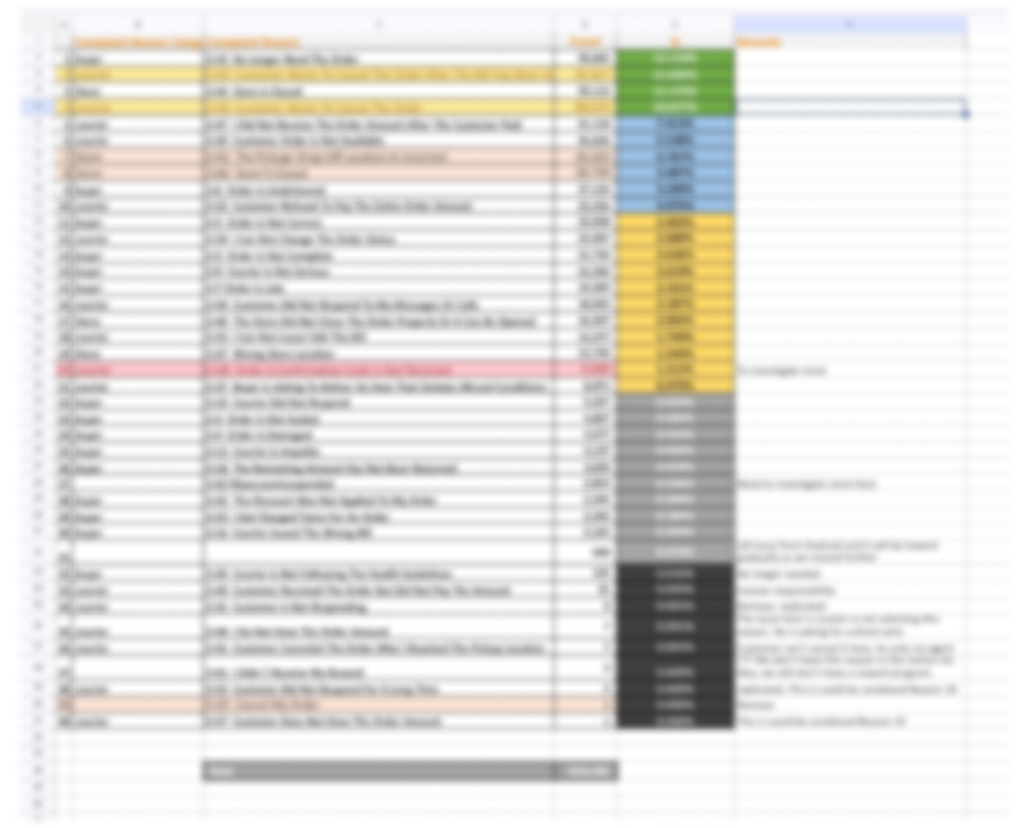
Zendesk Analytics Report
🧠 Core Concept

Treating complaints as a journey—not a single touchpoint.

  • Complaints unfold as multi-stage experiences involving multiple actors
  • Each interaction shapes the next, influencing the overall user experience
  • Effective handling requires understanding the full service context, not isolated tickets

🧭 Structuring the Complaint System

1. Collect Complaint Reasons

Gathered the most frequently used complaint reasons from historical data to identify outdated, duplicate, or irrelevant entries.
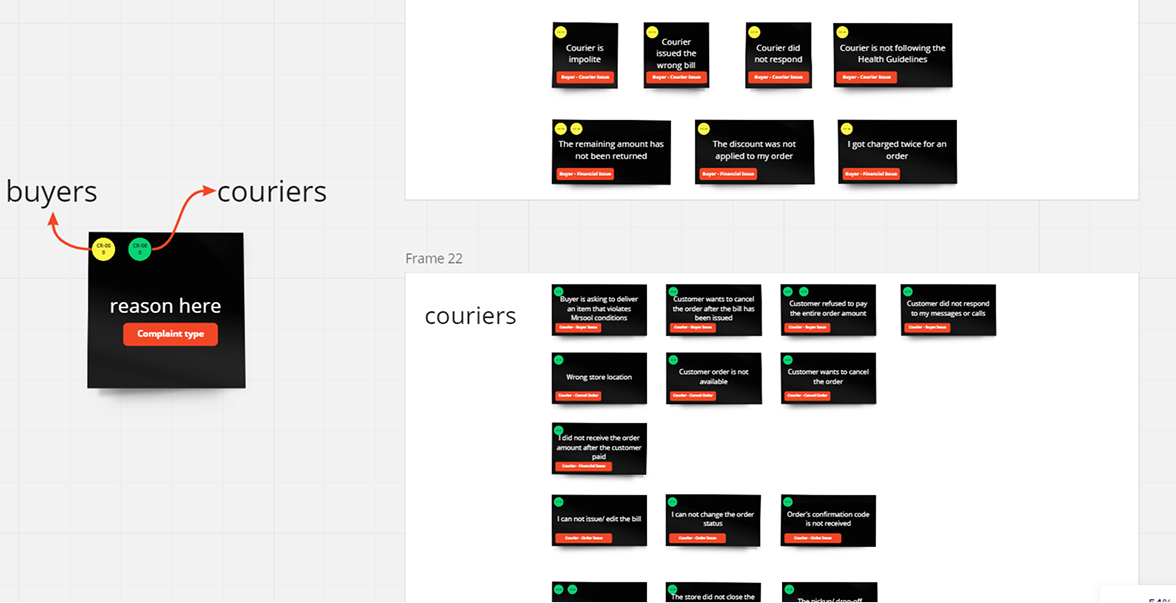
Complaints Reasons (Customer & Courier)
2. Define Contextual Tree Structure

“Contextual complaints” allow us to understand complaints within their full service context—across interactions, systems, and user expectations—rather than treating them as isolated tickets.

Defined a contextual complaint framework where complaint options adapt based on:

  • Order status
  • User type (customer / courier)
  • Service type
  • Order Location
  • Complaint Type
  • Priority level

This ensures users only see relevant complaint reasons at the right moment, reducing friction and improving clarity.
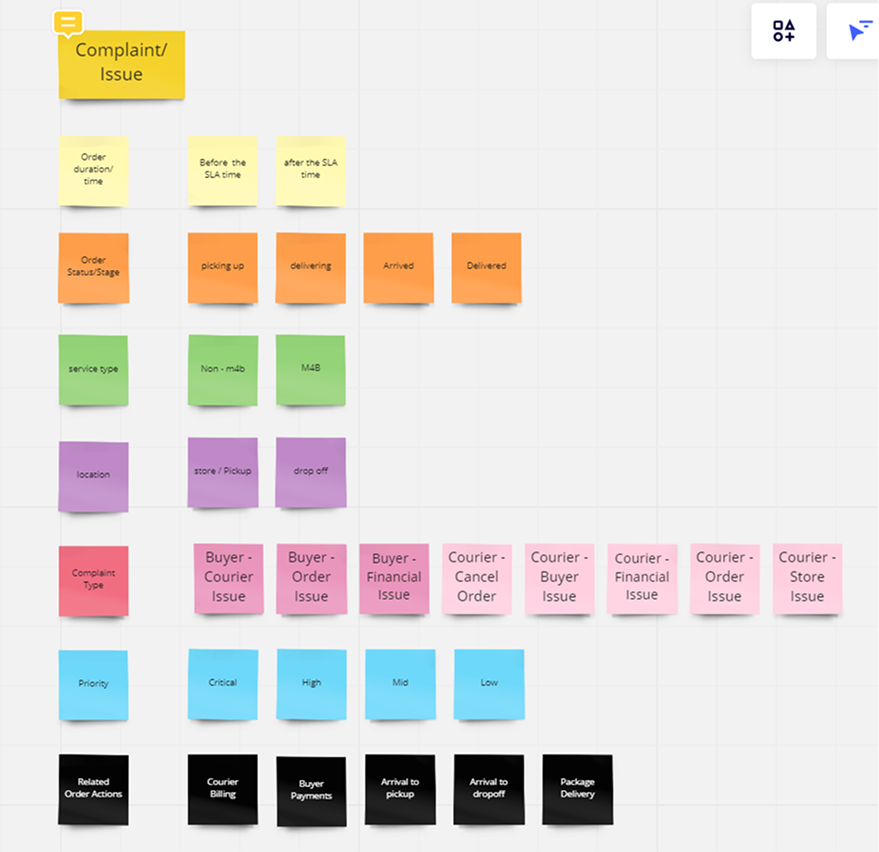
Contextual Tree Structure
3. Define Priorities and SLA's

Collaborated with Product to define a priority matrix and align complaint types with SLA expectations based on:

  • User impact
  • Issue severity
  • Business rules

This enabled more consistent and efficient ticket handling.
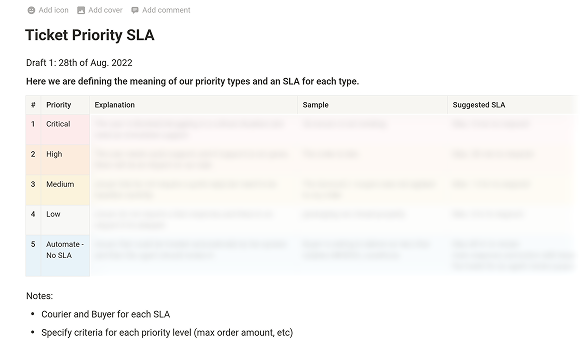
Table of Ticket Priority and SLA
Ticket Priority and SLA
4. Organize Filtered Reasons

Used Notion to document and organize the filtered complaint reasons within the new tree structure, assigning conditions and context for each reason to support configuration and implementation.

Rebuilt the Complaint Tree by:

  • Removing outdated and duplicate reasons
  • Grouping complaints into clear, structured categories
  • Assigning contextual conditions for each complaint

The result is a clean, scalable system aligned with real user scenarios.
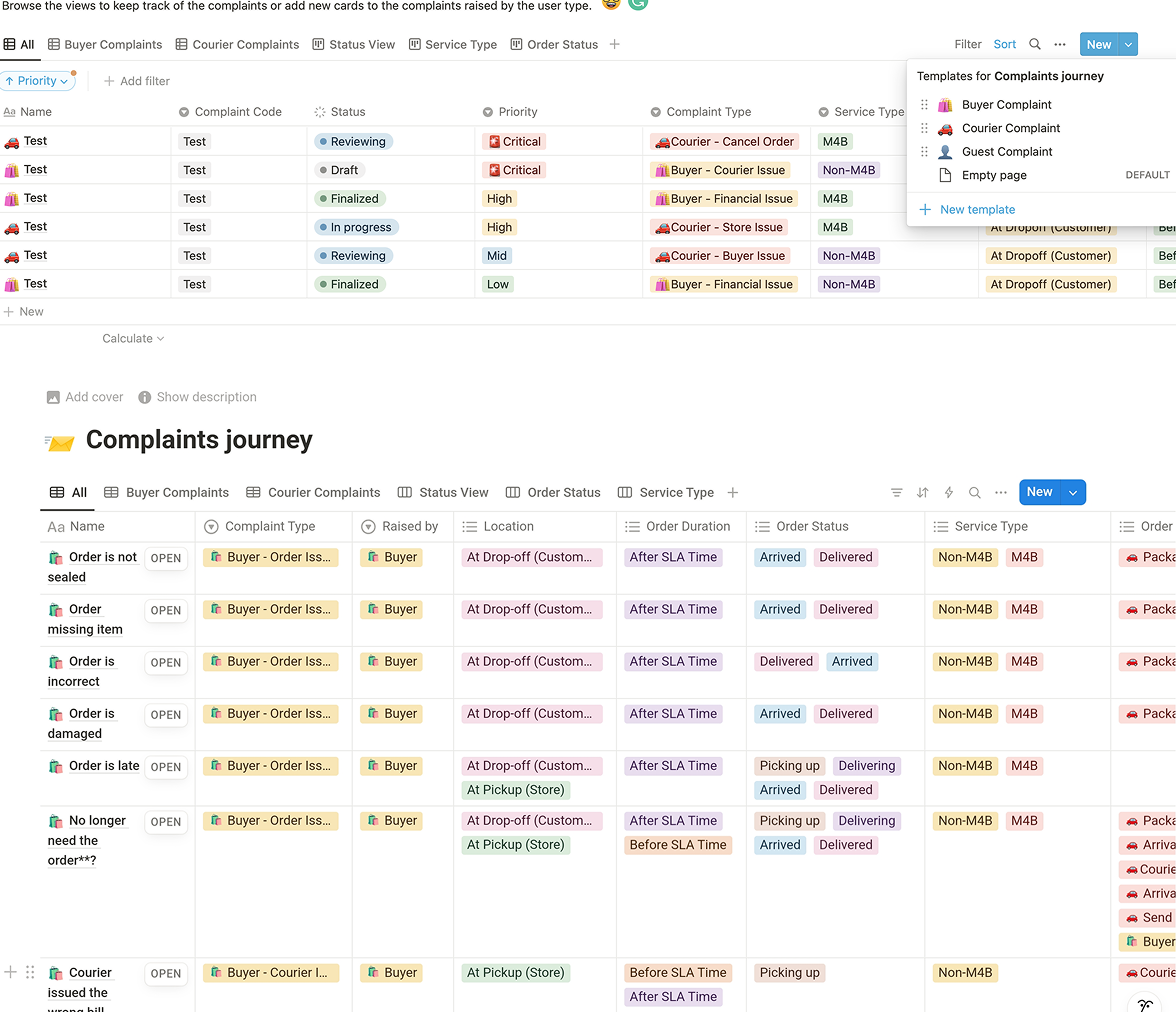
Complaints Tree Configuration (Example) in Notion
Complaints Tree Configuration (Example)
5. Map Reasons to Order Journey

Mapped complaint reasons across the order journey using status indicators, ensuring each complaint appears:

  • At the right stage
  • In the right context
  • With clear relevance to the user’s situation

This connected complaints directly to real user flows, rather than static categories.
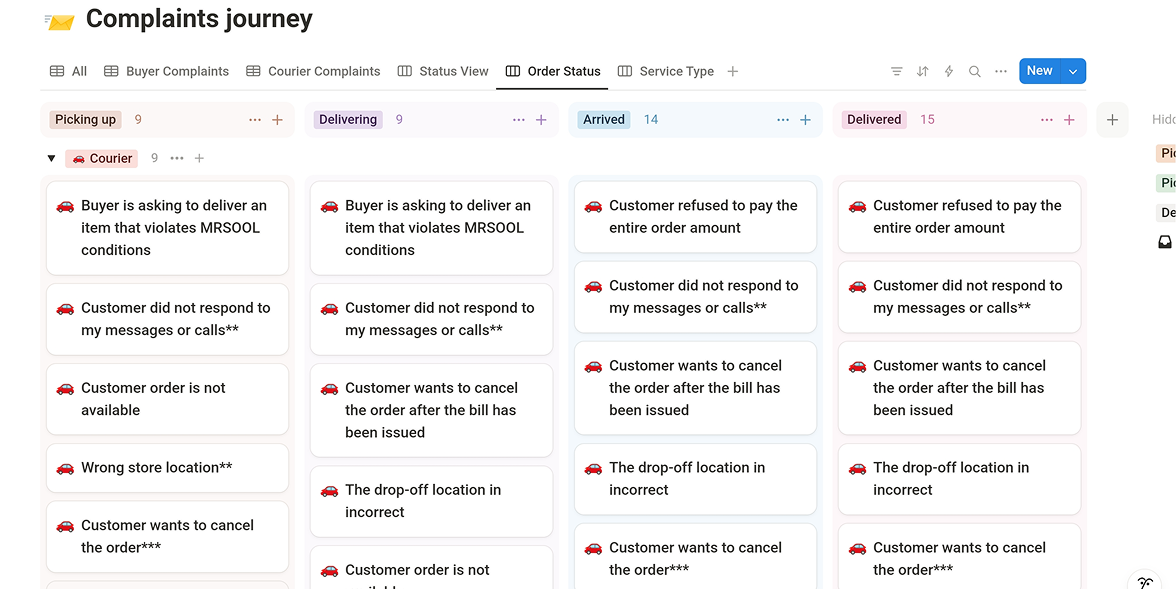
Complaints Contextual Journey (Example) in Notion
Complaints Contextual Journey (Example)
6. Implementation Readiness

Structured the Complaint Tree into a development-ready configuration, including:

  • Context conditions
  • Complaint logic
  • System rules

Enabling smooth handoff to engineering and scalable implementation.
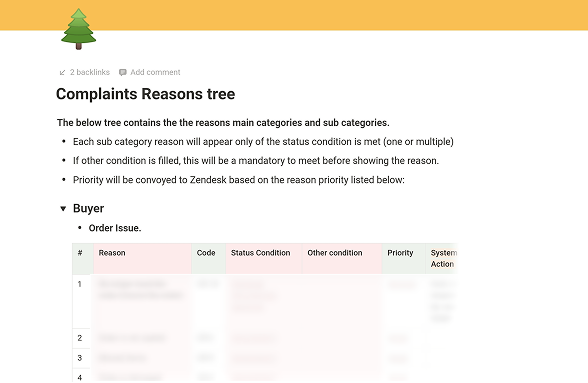
Complaints Tree for Dev Handoff
Disclaimer
This project is shared for portfolio purposes only. All rights, assets, and content belong to their respective owners.

Latest Work

See All Work
Cover of STC Wholesale illustration
Jan 2026

UX Audit: STC Wholesale Portal

Explores a hypothetical UX audit and redesign concept for a telecom wholesale portal, focusing on improving clarity, discoverability, accessibility, and B2B conversion experience.

Business Design
Design Research
Design Strategy
Cover of Roads intersecting with support icons
Jan - May 2023

Customer Support Initiative Roadmap

Customer support operations were fragmented across workflows, tools, and teams—leading to inconsistent resolution, operational inefficiencies, and poor customer experience. This project focused on defining a structured roadmap to align support as a scalable, high-impact service.

Design Strategy
Product Management
Customer Experience (CX)
Oct - Nov 2022

Customer Support Workflows Workshops

Facilitated cross-functional workshops to deconstruct how support operates across user journeys. Transformed fragmented, tribal knowledge into a structured system of root causes, decision logic, and resolution flows, revealing gaps between product experience and operational reality.

Workshops and Facilitation
Service Design
Design Research

Connect and Collaborate 📩

Let’s talk and design whats next.

Thank you! Your message has been sent and will respond back shortly.
Oops! Something went wrong while submitting the form, Try again later.
arrow up