
Oct - Nov 2022
Facilitated cross-functional workshops to deconstruct how support operates across user journeys. Transformed fragmented, tribal knowledge into a structured system of root causes, decision logic, and resolution flows, revealing gaps between product experience and operational reality.
Following the launch of the in-app support experience and Contextual Complaints Journey, users could submit complaints more easily. However, backstage operations remained unstructured and reactive, creating a disconnect between user expectations and actual service delivery.
Support teams faced increasing ambiguity:
As a result, agents had to manually reconstruct each case, leading to slower resolutions, inconsistent service quality, and operational inefficiencies.
This revealed a critical gap: while the frontstage experience had evolved, the support system itself had not.
Support operations lacked standardized workflows, clear decision logic, and defined resolution paths, forcing agents to rely on manual interpretation and ad-hoc decision-making.
At scale, this led to:
These challenges extended beyond operations. Frontline teams operated under constant pressure, contributing to burnout and retention challenges, while users experienced inconsistent outcomes and reduced trust in support.
As volumes grew, these issues became visible in performance metrics, with rising SLA breaches and resolution delays—highlighting the need for a more structured, scalable support system.
Primary:
Secondary:
How might we enable support teams to resolve issues efficiently and transparently, while shifting support into a structured, scalable system?
The starting point was to understand how support actually operates—not how it was designed. By reviewing complaint structures, workflows, and internal documentation, a clear gap emerged:
This reframed the problem:
Support was not just a UX issue—it was a service design problem...
Why this mattered:
Without aligning experience with operations, improvements at the interface level would continue to fail in execution, reinforcing the need for system-level workflow redesign to support Mrsool’s growth.
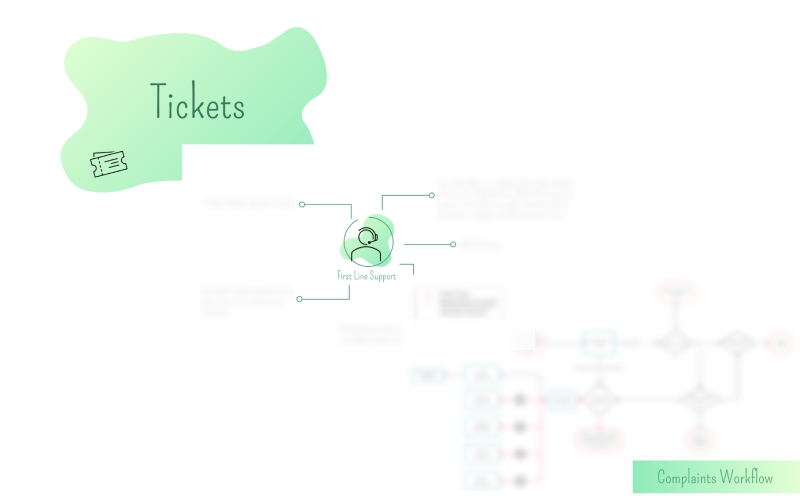
To move beyond assumptions, I facilitated 6 cross-functional workshops (10 hours total) across Product, UX, and Customer Support. Sessions were split across:
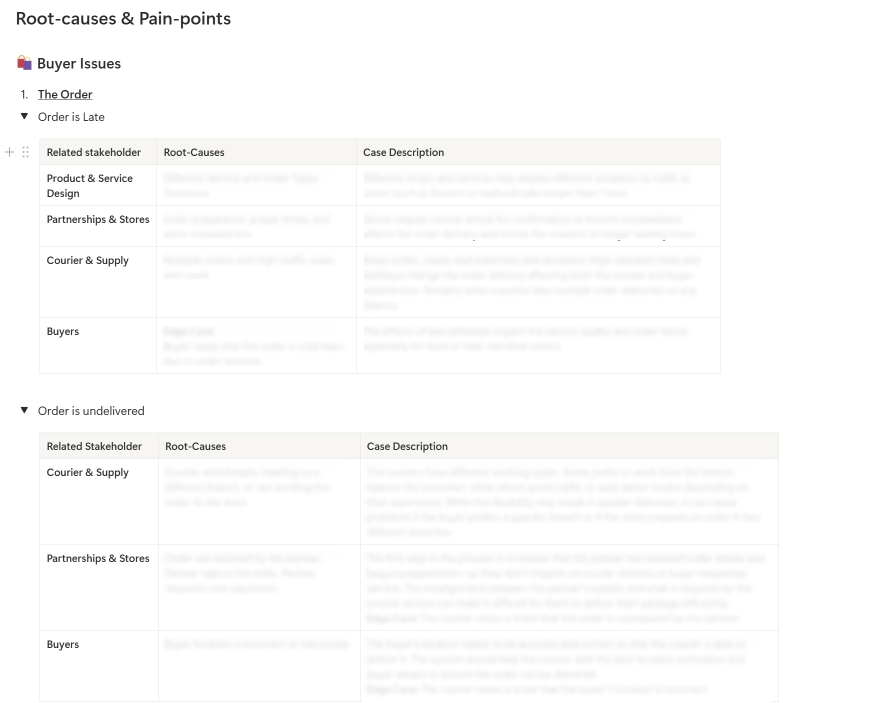
Each complaint reason was mapped using a structured framework covering 8 dimensions:
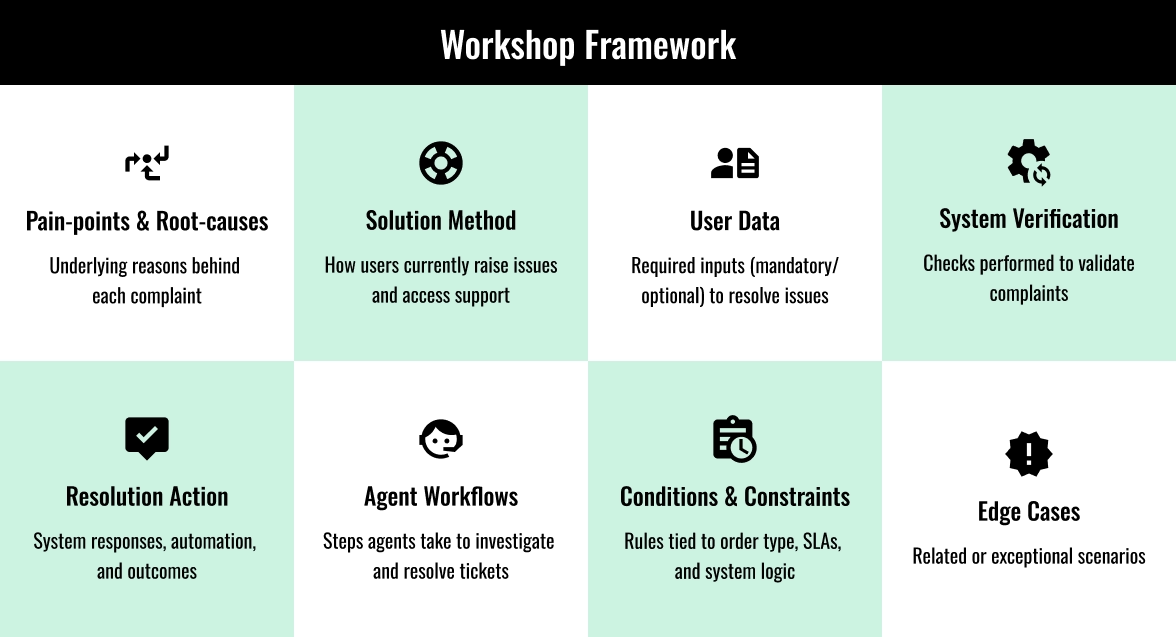
Why this approach:
Traditional discussions tend to focus on symptoms and opinions. This framework forced conversations into cause → logic → resolution, enabling system-level thinking. This turned scattered tribal knowledge into a shared, structured understanding of how support actually works.
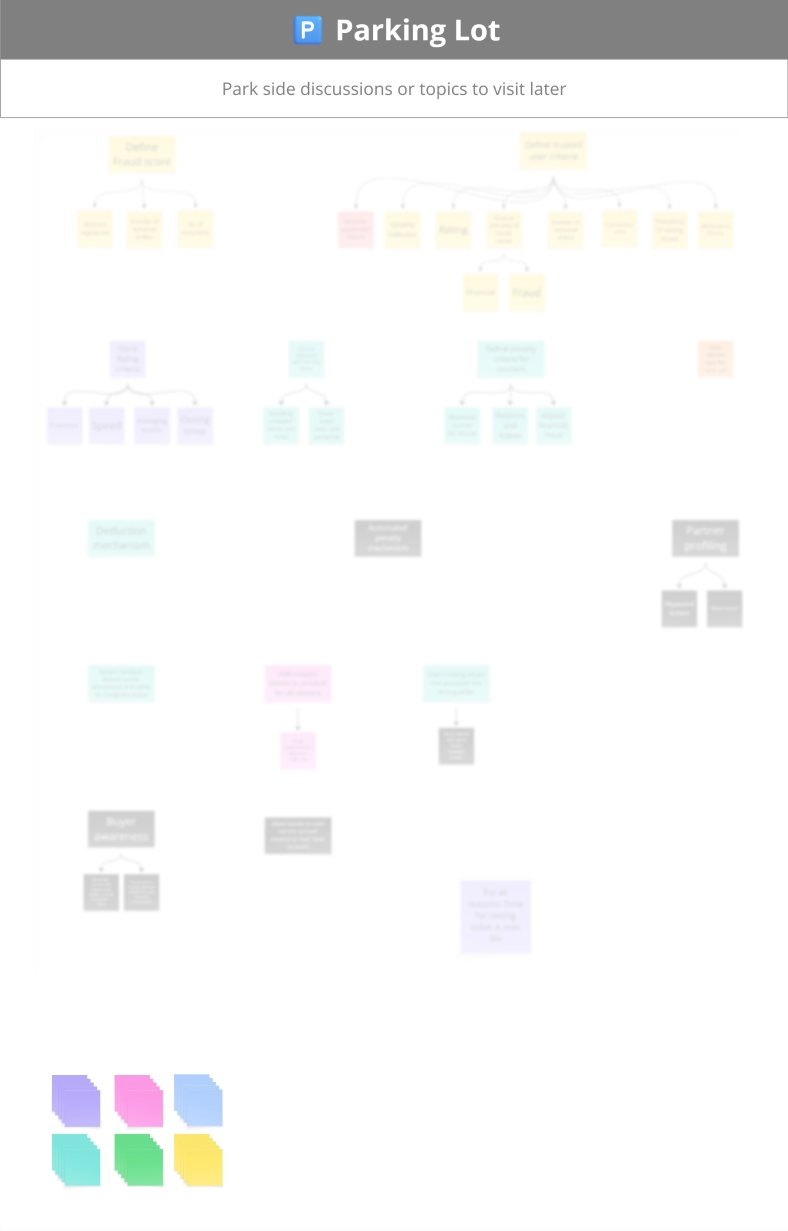
The workshops were designed in Miro as a structured working system, not just a visual board.


Workshops were facilitated to uncover real operational complexity beyond documented flows, revealing:

Key insight: Many “support problems” were actually upstream product and service design failures
Impact: Aligned teams on a shared reality:
Tradeoff: Not all edge cases were deeply explored in-session. Instead, they were intentionally parked to maintain momentum, avoid derailing core flows, and create a backlog for deeper investigation.
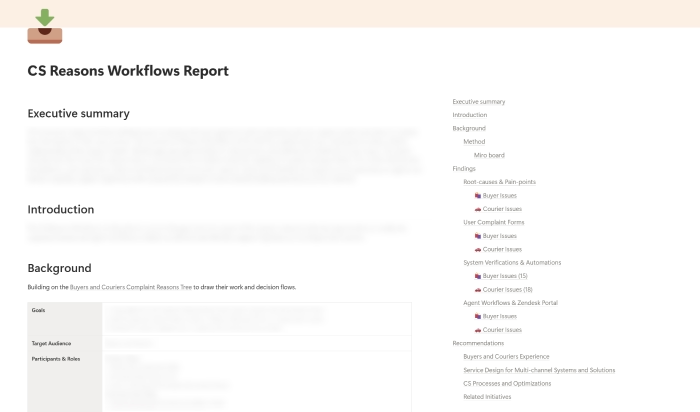
All workshop outputs were consolidated into a structured Notion report, transforming raw discussions into a structured, reusable system artifact This connected three critical layers:
Why this step mattered:
Without synthesis, insights remain fragmented and unusable at scale. This step translated discussions into a scalable system design foundation.
Impact:
Shifted support from: Reactive ticket handling → structured, logic-driven system design.
The final output wasn’t just documentation—it became a foundation for multiple initiatives.
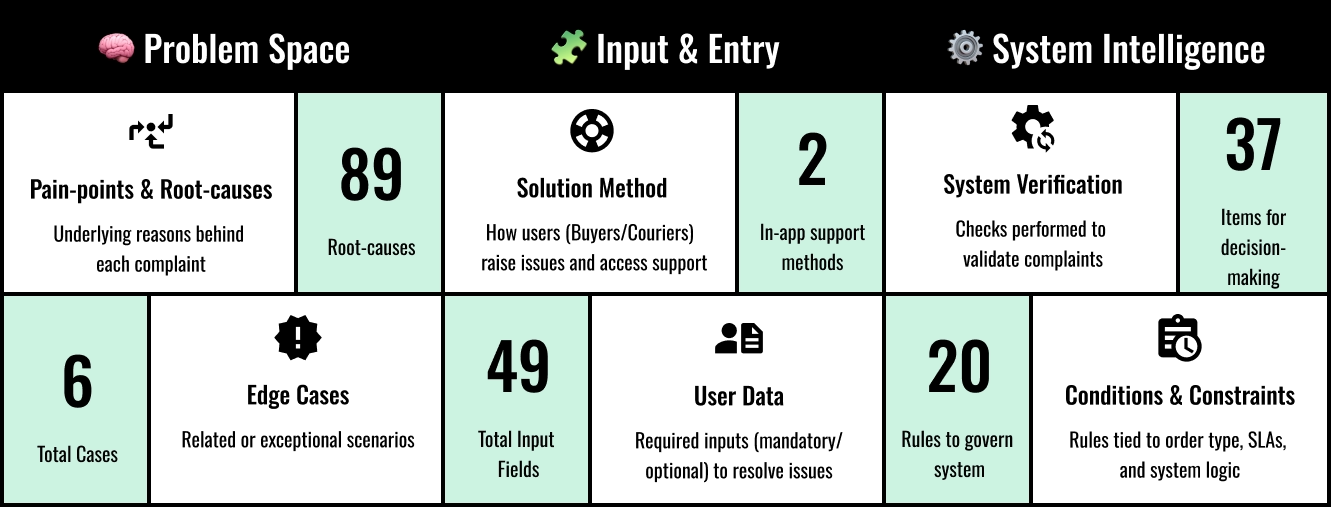
Mapped each complaint reason to its underlying root causes, stakeholders, and case definitions, enabling cross-functional alignment.
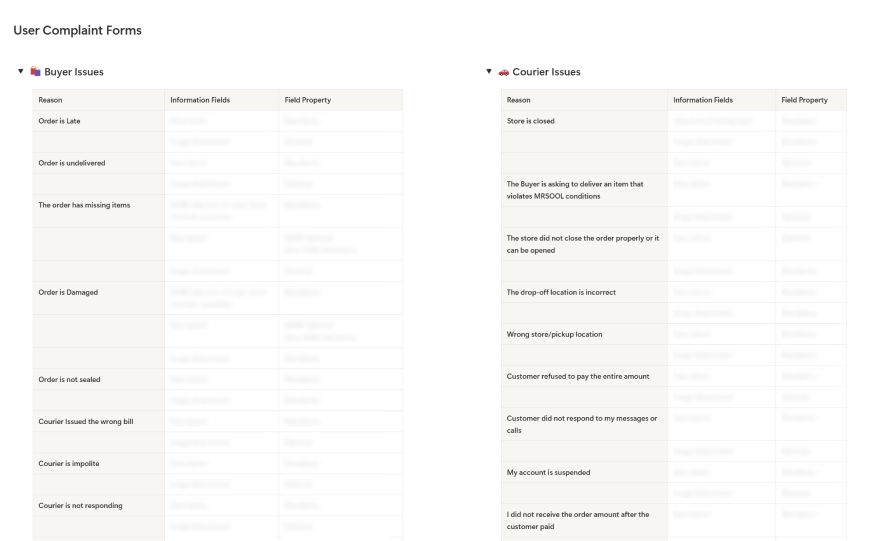
Defined the exact data required from users, including field types and mandatory vs optional inputs—to replace generic forms with context-aware data collection, improving input quality and resolution accuracy.
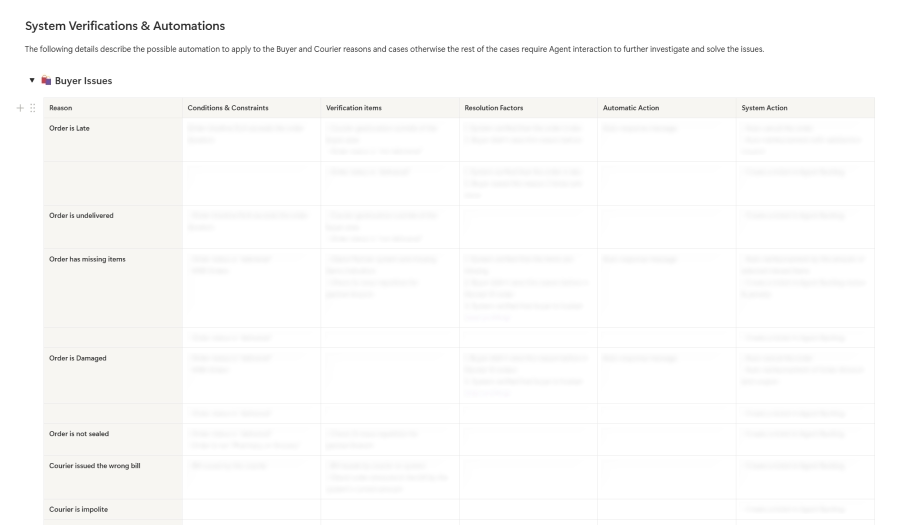
Designed a logic layer including Conditions & constraints, Verification checkpoints, Resolution factors, and Automated system actions. This enabled a path toward automation and reduced manual dependency.
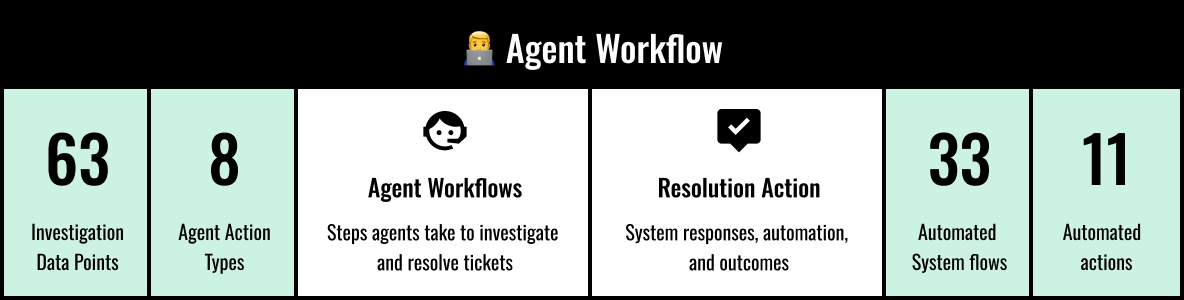
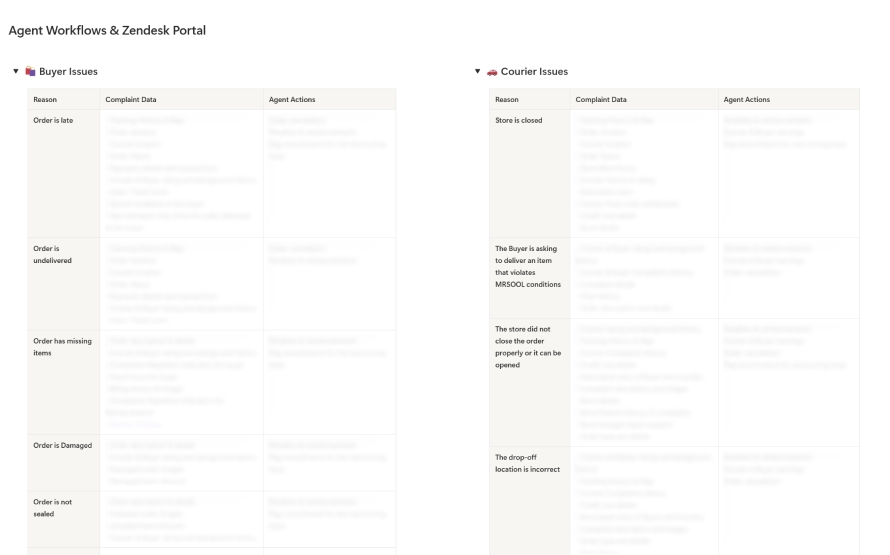
Mapped detailed agent-side processes that included relevant Zendesk data required for investigation, step-by-step workflows and available actions per scenario. This enabled consistent, structured agent behavior instead of ad-hoc decision-making.
18 actionable reccomendations were developed across:
👉 Directly fed into the Support Initiative Roadmap
Across all sessions, each complaint was transformed from a vague issue into a fully defined system scenario:
This surfaced critical opportunities:
This repositioned support from a cost center to a strategic system driving product quality, operational efficiency, and user experience at scale.
Customer support operations were fragmented across workflows, tools, and teams—leading to inconsistent resolution, operational inefficiencies, and poor customer experience. This project focused on defining a structured roadmap to align support as a scalable, high-impact service.

Complaints are often treated as isolated incidents—but in reality, they unfold as multi-stage journeys shaped by interactions, systems, and emotions. This project reframed complaints as a service journey, uncovering systemic breakdowns and transforming a fragmented, ticket-based model into a contextual, SLA-driven system—reducing resolution time and improving efficiency, clarity, and overall experience.
Let’s talk and design whats next.
