

Mar - Oct 2021
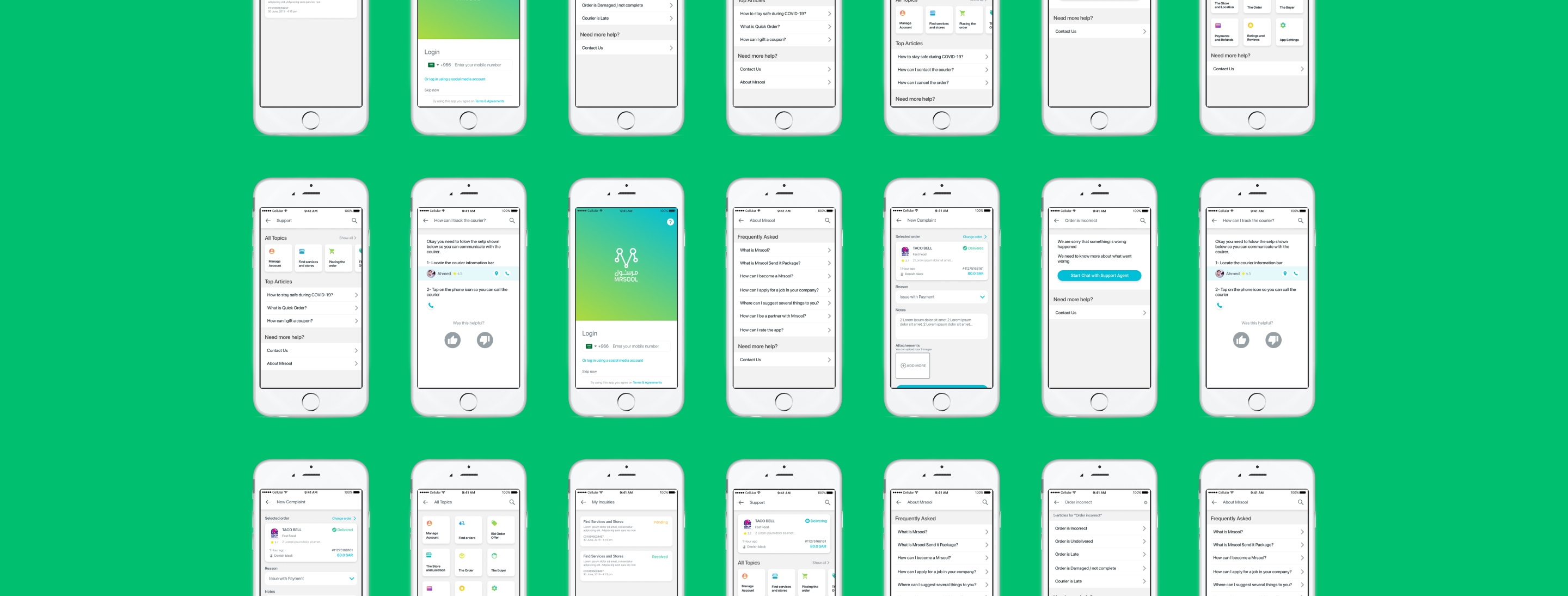
Designed a mobile-first support system as part of a broader service transformation, enabling customers and couriers to access contextual, guided support directly within the app. The solution improved discoverability, reduced friction, and established support as a core product capability rather than a reactive function.
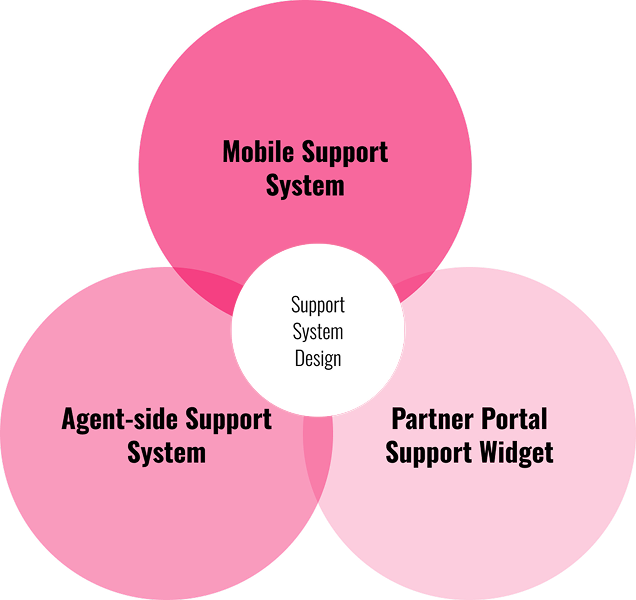
Led the design of a multi-phase support transformation, building an end-to-end ecosystem across customers, couriers, merchants, and support agents—from mobile entry points to agent-side resolution systems.
The integration of Zendesk across all MRSOOL products acted as a critical enabler, centralizing workflows and improving operational coordination during the COVID-driven demand surge. This resulted in higher solve rates, improved efficiency, and a more scalable support model aligned with global benchmarks.
Support access was fragmented, with customers and couriers relying on external communication channels such as Telegram and Social Media to resolve issues, resulting in unclear processes, delayed responses, and inconsistent experiences.
During the COVID-driven demand surge, complaint volumes increased significantly, exposing the limitations of the support system. Users and internal teams struggled to manage and resolve order issues efficiently, putting pressure on operations and risking user retention.
MRSOOL Customers and Couriers using the mobile platform.
Design and implementation of a new in-app support system within the MRSOOL mobile app, featuring an integrated complaints ticketing system powered by Zendesk.
How might we create a seamless, responsive support system that enables customers and couriers to resolve their issues quickly and confidently during their journey?
This stage is crucial and Identified root causes: lack of clarity, guidance, and structured entry points. Through understanding of current state, Direction was established for a more context-aware, in-app support system
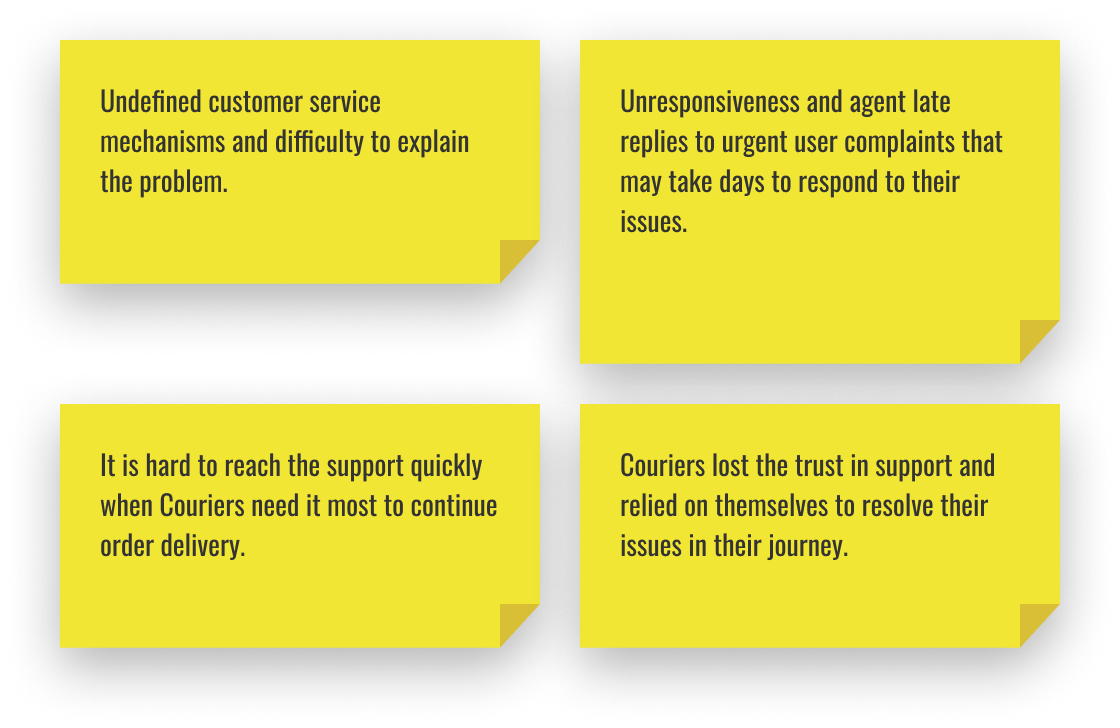
Built on existing user research to identify recurring breakdowns in the support experience—users struggled with unclear complaint flows, delayed responses, and difficulty articulating issues during critical moments.
Complemented this with competitive analysis of in-app support systems to understand how leading platforms structure flows, guidance, and responsiveness.
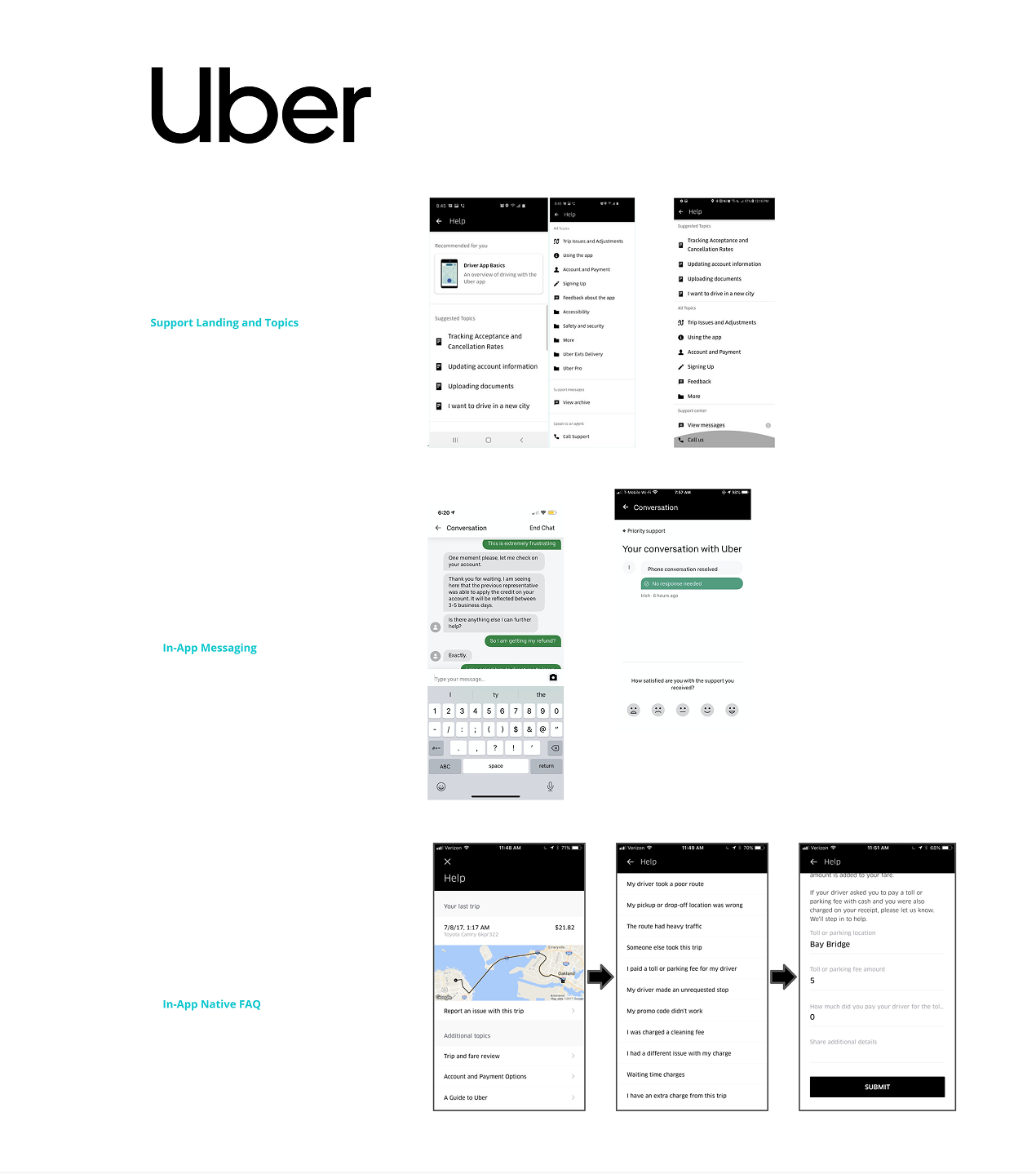
Constraint and Tradeoff: Relied on existing research and legacy complaint structures, requiring adaptation rather than redesign from scratch. This allows team to utilize current structures for first version, while being open for future iterations and improvements as they get prioritised.
Mapped the current support system (AS-IS) to uncover:
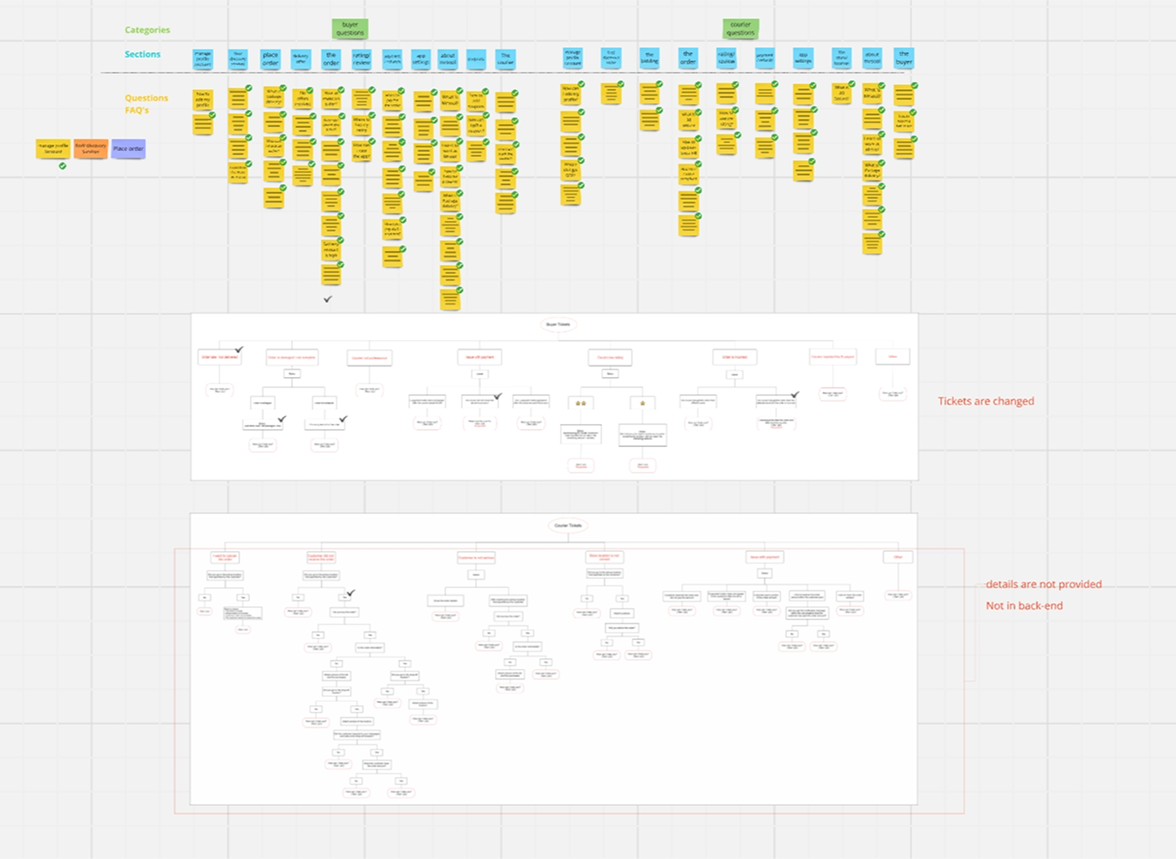
Designed a future-state information architecture, organizing complaint categories and interaction layers across customers, couriers, and guest users.

Defined user flows and action logic, ensuring each path connects to:

Constraint and Tradeoff: Balanced completeness vs simplicity, reducing options to improve clarity while accepting limited coverage of edge cases.
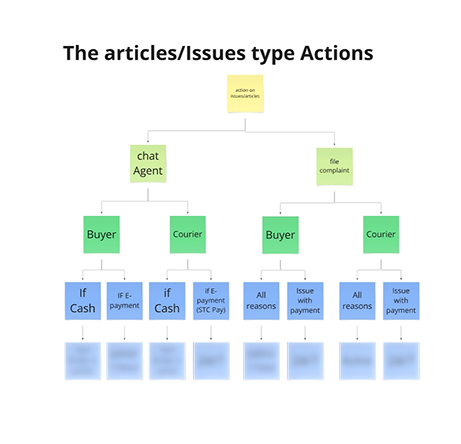
Design logic trees to define support actions and resolution methods tailored to user contexts and order types.
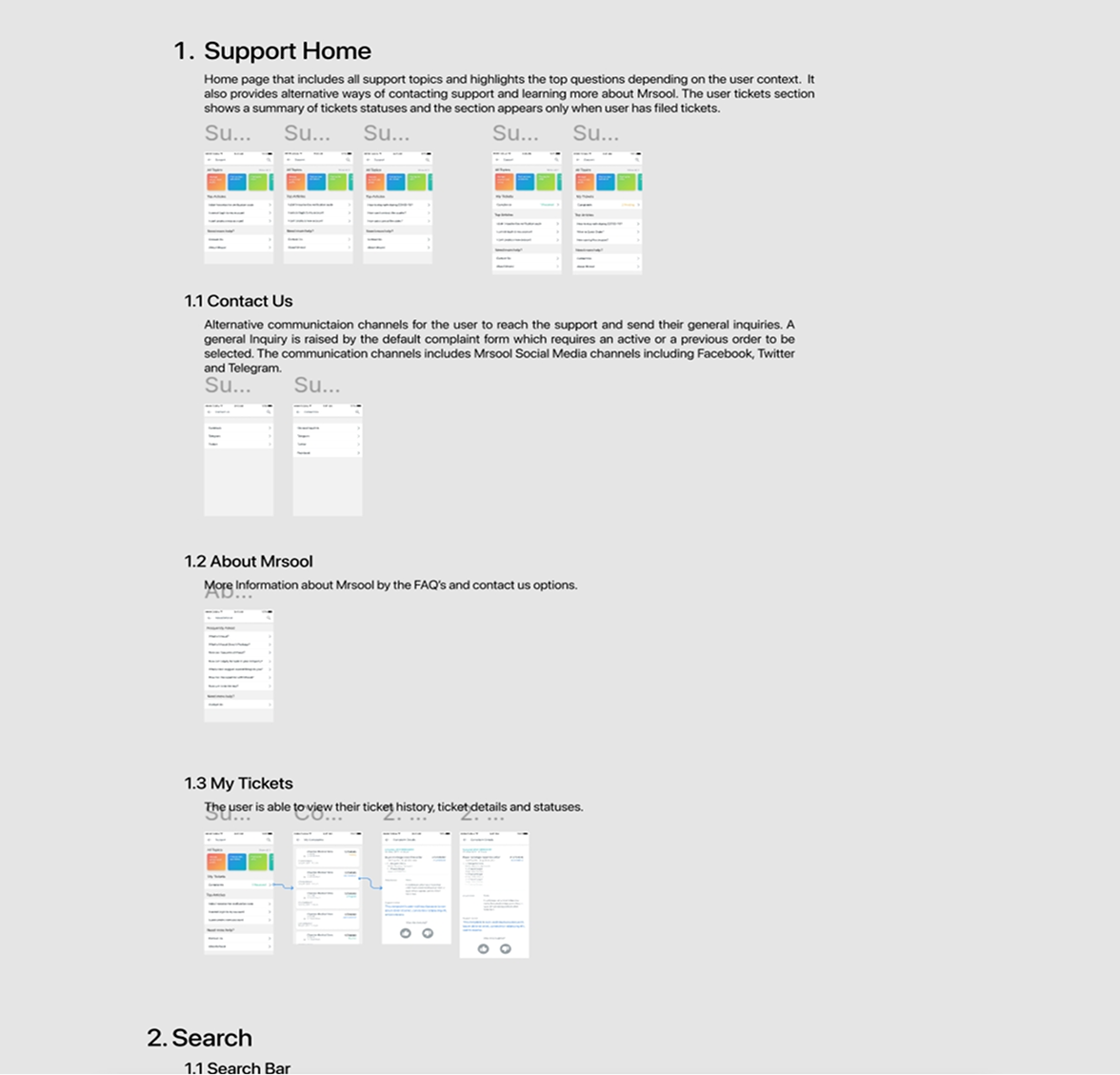
Started with mid-fidelity screens to visualize key interactions and bring the core support flow to life.
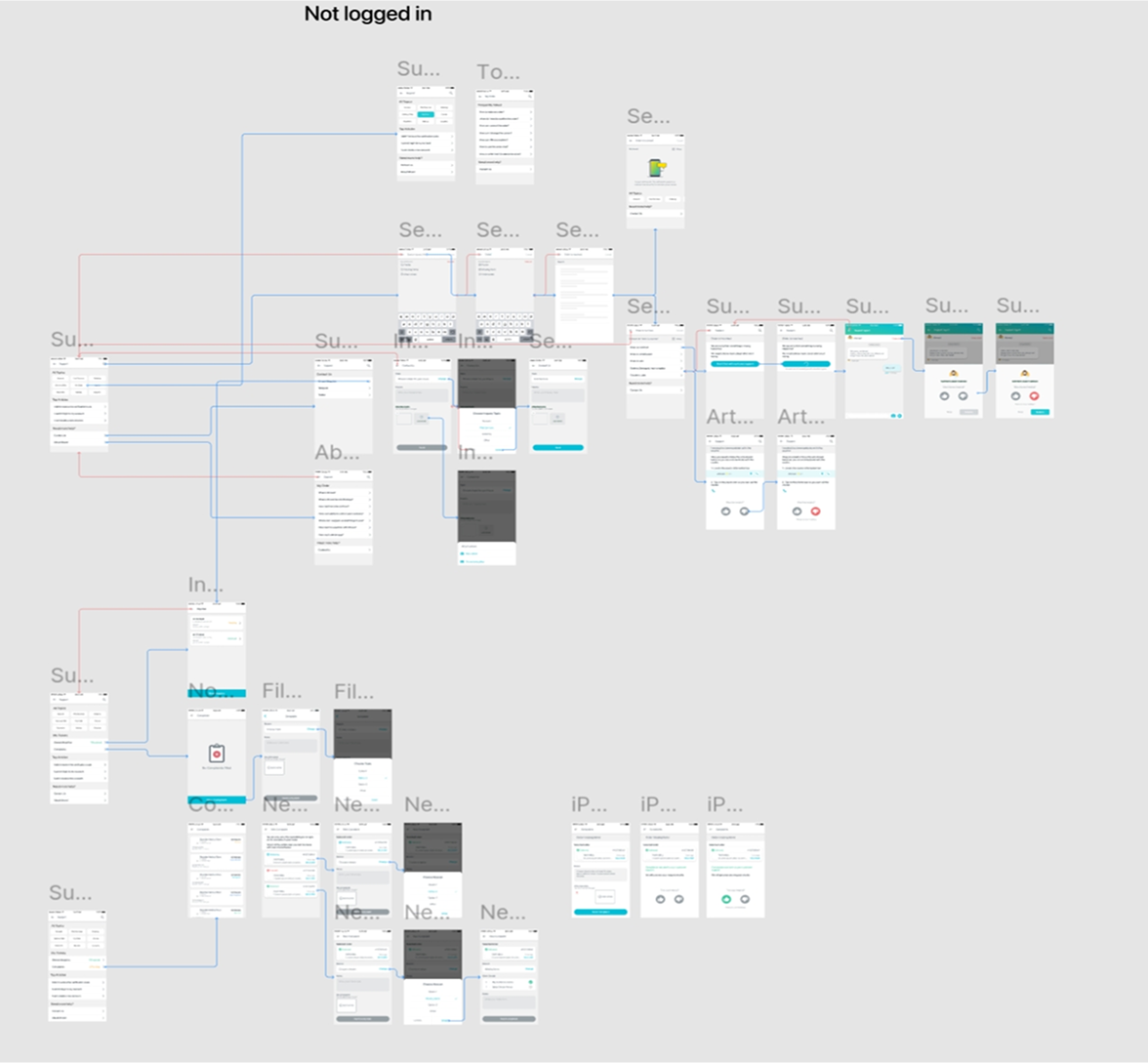
Mapped the primary user journey using mid-level wireframes to outline how users navigate the support system from entry point to resolution.

Ran internal critique sessions to gather feedback, identify usability gaps, and refine the experience across multiple review cycles.
Designed modular components and interaction flows to support scalability across platforms and future iterations.
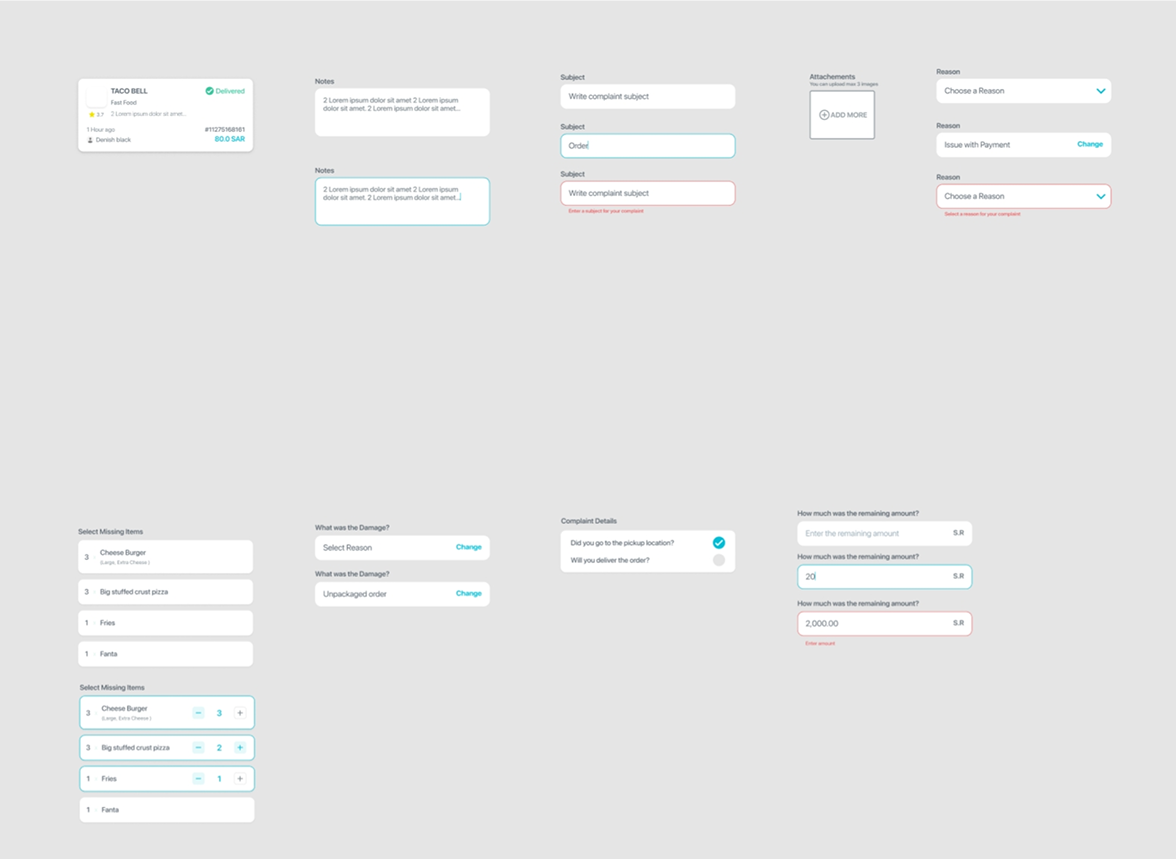
Constraints and Tradeoff: Needed to align with existing platform structures (iOS/Android), backend limitations, and MRSOOL rebranding phases. The approach was to utilize old component styles for the first phase, and include support user flows as part of new design system launch plans.
Detailed every screen-to-screen interaction, ensuring a smooth, intuitive experience for users throughout their support journey.

Transformed flows into polished, pixel-perfect screens and connected them into clickable prototypes for testing and validation.
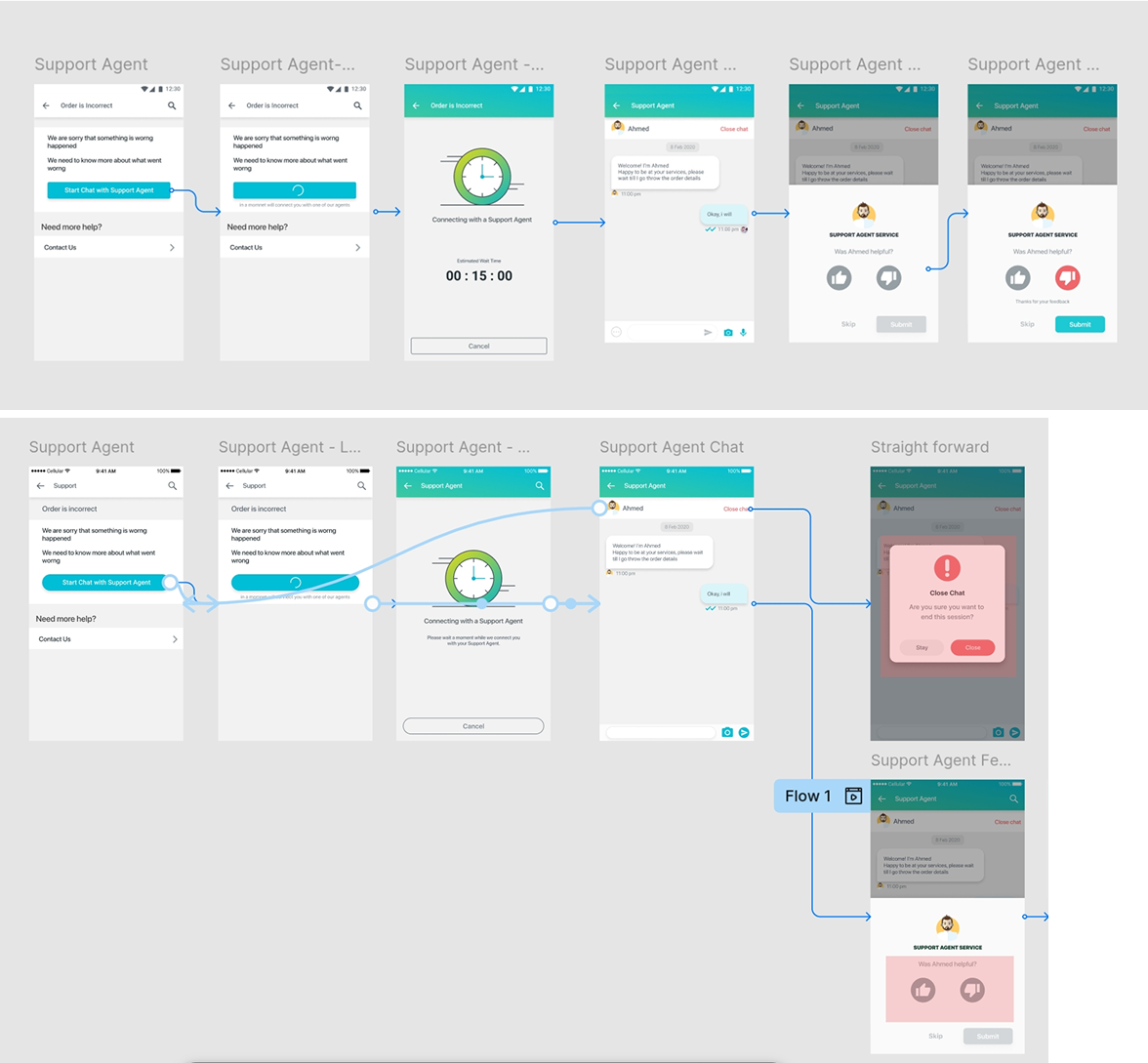
Created clear, platform-specific handoff packages for iOS and Android — including full user flow, design components, and documentation — to streamline implementation.
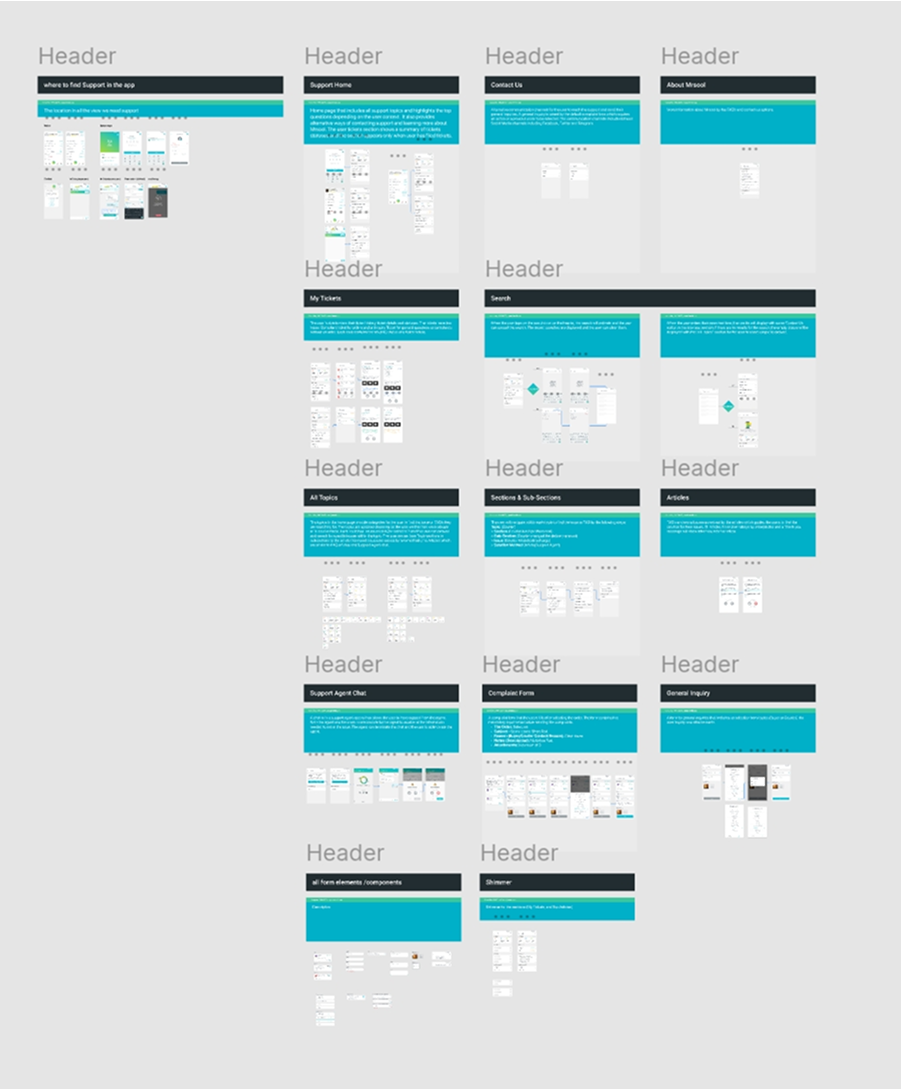
Constraint and Tradeoff: While system includes advanced features such as search to improve discoverability. After discussions, the first vsersion prioritized core flows and usability over adding advanced features early, adapting to feasibility constraints and ensuring alignment of product and business release goals.
Conducted guerrilla testing and internal QA collaboration to validate flows, identify usability issues, and refine the experience post-development.
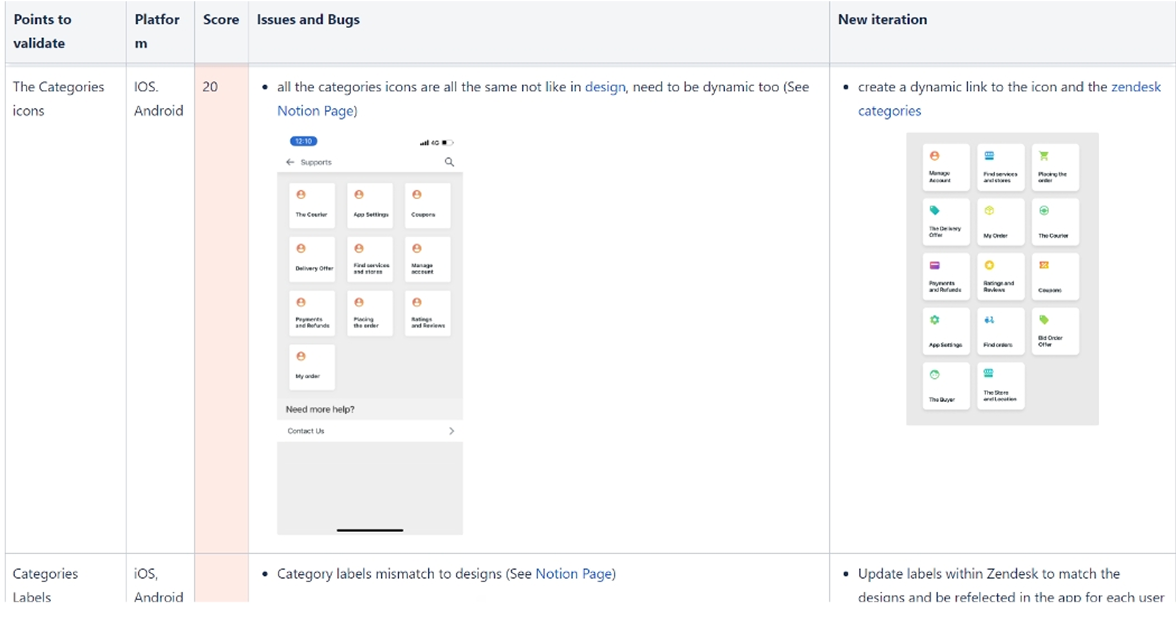
Conducted testing and design reviews on the developed versions of the support system to identify missing elements, inconsistencies, and experience gaps across both iOS and Android platforms. Iteratively refined designs to align with platform guidelines and ensure a cohesive user experience. This ensured alignment between design intent and final product
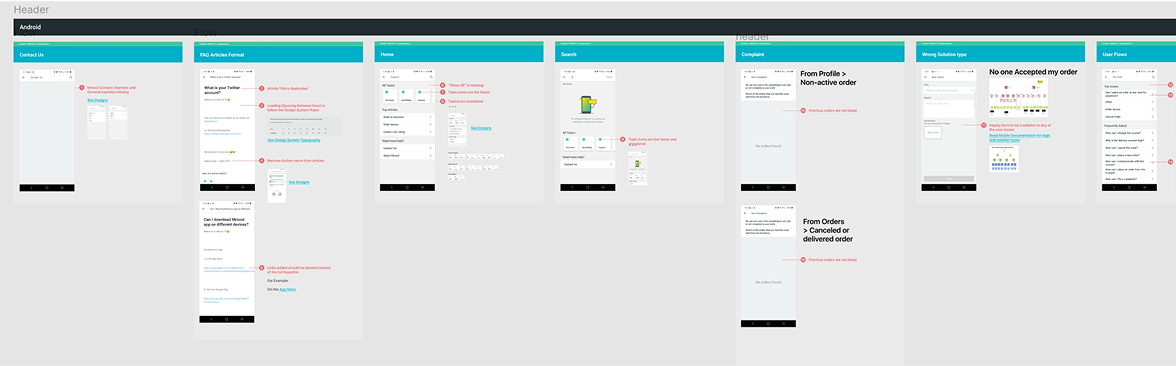
The new in-app support system is now live and accessible to MRSOOL customers and couriers, enabling them to resolve issues, find answers to frequently asked questions, and reach out to support when needed — all designed to enhance service quality and user experience.
Key Impact

Customer support operations were fragmented across workflows, tools, and teams—leading to inconsistent resolution, operational inefficiencies, and poor customer experience. This project focused on defining a structured roadmap to align support as a scalable, high-impact service.

Facilitated cross-functional workshops to deconstruct how support operates across user journeys. Transformed fragmented, tribal knowledge into a structured system of root causes, decision logic, and resolution flows, revealing gaps between product experience and operational reality.
Let’s talk and design whats next.
